drnbansal@ymail.com
Phone : +918447542860
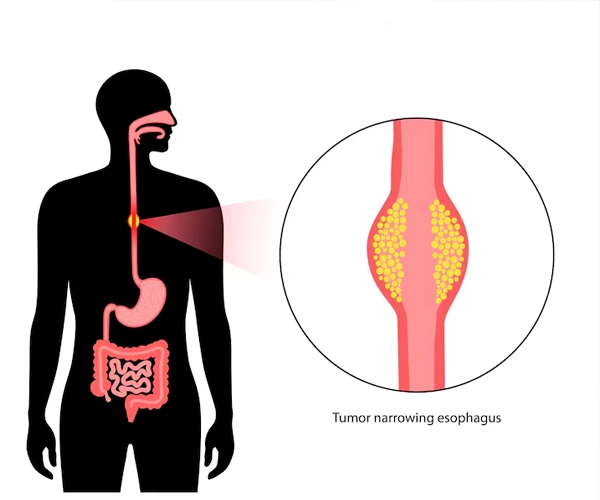
If you are searching for the best Esophageal Cancer Treatment in Janakpuri, early diagnosis and expert gastroenterology care are essential for effective management of food pipe cancer. Esophageal Cancer is a malignant condition in which abnormal cells grow uncontrollably in the lining of the esophagus, the muscular tube that carries food from the mouth to the stomach.
Esophageal cancer can affect swallowing, nutrition, and overall health. In the early stages, symptoms may be mild and can resemble common digestive problems. Advanced diagnostic procedures such as upper GI endoscopy, biopsy, endoscopic ultrasound (EUS), and imaging tests help detect the disease and determine the most appropriate treatment approach.
At Dr. Naresh Bansal's Gastro & Liver Clinic, patients receive comprehensive evaluation for esophageal disorders, advanced diagnostic support, and personalized treatment guidance for esophageal cancer and related conditions.
What is Esophageal Cancer?
Esophageal Cancer is a type of cancer that develops in the tissues of the esophagus (food pipe). The esophagus connects the throat to the stomach and helps transport swallowed food.
The two main types of esophageal cancer are:
Squamous Cell Carcinoma
This develops from the flat cells lining the upper and middle parts of the esophagus.
Adenocarcinoma
This develops from glandular cells, commonly in the lower part of the esophagus, and is often associated with long-term acid reflux and Barrett’s esophagus.
The location, size, and stage of the tumor determine treatment options.
Causes and Risk Factors of Esophageal Cancer
Esophageal cancer may develop due to changes in esophageal cells caused by various risk factors.
Common risk factors include:
- Long-term acid reflux (GERD)
- Barrett’s esophagus
- Smoking
- Excessive alcohol consumption
- Obesity
- Chronic irritation of the esophagus
- Difficulty swallowing disorders
- Family history of esophageal cancer
- Increasing age
- Certain dietary factors
Regular medical evaluation is important for individuals with persistent swallowing problems or long-term reflux symptoms.
Symptoms of Esophageal Cancer
Symptoms may not appear in the early stages. As the disease progresses, patients may experience:
- Difficulty swallowing food (dysphagia)
- Feeling of food getting stuck in the chest
- Pain while swallowing
- Unexplained weight loss
- Loss of appetite
- Chest discomfort
- Persistent cough
- Hoarseness of voice
- Heartburn symptoms
- Vomiting
- Weakness and fatigue
Progressive difficulty swallowing should always be evaluated by a gastroenterology specialist.
Complications of Esophageal Cancer
Untreated esophageal cancer may lead to:
Severe Difficulty Swallowing
Tumor growth can narrow the esophageal passage.
Malnutrition and Weight Loss
Difficulty eating may result in inadequate nutrition.
Esophageal Blockage
Advanced tumors may obstruct food passage.
Spread to Nearby Organs
Cancer may spread to lymph nodes, liver, lungs, or other tissues.
Reduced Quality of Life
Symptoms can significantly affect daily activities and nutrition.
Early diagnosis improves available treatment options.
How is Esophageal Cancer Diagnosed?
Accurate diagnosis helps determine the type, stage, and treatment plan.
Upper GI Endoscopy
Endoscopy is the primary test for evaluating suspected esophageal cancer.
During the procedure:
- A flexible camera examines the esophagus
- Abnormal areas are identified
- Tissue samples are collected for biopsy
Biopsy
Biopsy confirms:
- Presence of cancer cells
- Type of cancer
- Tumor characteristics
Endoscopic Ultrasound (EUS)
EUS provides detailed images of the esophageal wall and nearby lymph nodes.
It helps assess:
- Depth of tumor invasion
- Lymph node involvement
- Cancer staging
CT Scan
A contrast-enhanced CT scan helps evaluate:
- Tumor spread
- Nearby organ involvement
- Lymph nodes
PET-CT Scan
May be recommended to assess cancer spread in selected patients.
Barium Swallow Test
This imaging test helps evaluate swallowing problems and esophageal narrowing.
How is Esophageal Cancer Treated?
Treatment depends on:
- Stage of cancer
- Location of tumor
- Overall health
- Spread of disease
Surgery
For selected early-stage cancers, surgery may be performed to remove the affected part of the esophagus.
Esophagectomy
This involves removing part of the esophagus and reconnecting the remaining digestive tract.
Chemotherapy
Chemotherapy may be used:
- Before surgery to shrink the tumor
- After surgery to reduce recurrence risk
- For advanced cancer management
Radiation Therapy
Radiation may be combined with chemotherapy or used for symptom control.
Endoscopic Treatment
For very early-stage cancers, endoscopic procedures may be considered, including:
- Endoscopic mucosal resection (EMR)
- Endoscopic submucosal dissection (ESD)
Esophageal Stenting
In advanced cases causing blockage, an esophageal stent may help improve swallowing.
Treatment Procedure
Step 1 – Initial Consultation
A detailed evaluation of symptoms, medical history, reflux history, and previous reports.
Step 2 – Diagnostic Assessment
Endoscopy, biopsy, EUS, and imaging tests are performed to confirm diagnosis and stage the disease.
Step 3 – Cancer Staging
The tumor size, depth, lymph node involvement, and spread are assessed.
Step 4 – Personalized Treatment Planning
A treatment approach is selected based on cancer stage and patient health.
Step 5 – Follow-Up Care
Regular monitoring helps evaluate treatment response and manage long-term health.
Benefits of Early Esophageal Cancer Treatment
Seeking timely Esophageal Cancer Treatment in Janakpuri provides several benefits:
- Early detection of cancer
- Accurate diagnosis and staging
- Better treatment planning
- Improved swallowing management
- Prevention of nutritional problems
- Reduced risk of complications
- Access to multiple treatment options
- Better quality of life
- Long-term monitoring and support
Why Choose Dr. Naresh Bansal?
Dr. Naresh Bansal is an experienced Gastroenterologist specializing in gastrointestinal disorders, esophageal diseases, digestive cancers, and advanced endoscopic procedures.
Patients choose Dr. Naresh Bansal because of:
- Extensive experience in gastroenterology
- Expertise in evaluating esophageal disorders
- Advanced endoscopic diagnosis including endoscopy and EUS
- Accurate biopsy-based diagnosis
- Comprehensive assessment of gastrointestinal cancers
- Personalized treatment guidance
- Evidence-based medical care
- Focus on early diagnosis and prevention
- Patient-centered approach
- Long-term follow-up support
Frequently Asked Questions (FAQs)
1. What is esophageal cancer?
Esophageal cancer is a cancer that develops in the tissues of the esophagus, the tube that carries food from the throat to the stomach.
2. What are the early symptoms of esophageal cancer?
Early symptoms may include difficulty swallowing, food sticking sensation, chest discomfort, and unexplained weight loss.
3. How is esophageal cancer diagnosed?
It is diagnosed through upper GI endoscopy, biopsy, EUS, and imaging tests to determine the type and stage.
4. Can esophageal cancer be treated?
Yes. Treatment depends on the stage and may include surgery, chemotherapy, radiation, endoscopic therapy, or supportive procedures.
5. What is the role of EUS in esophageal cancer?
EUS helps evaluate how deeply the tumor has grown and whether nearby lymph nodes are involved.
Dr Naresh Bansal.All Rights Reserved © 2026