drnbansal@ymail.com
Phone : +918447542860
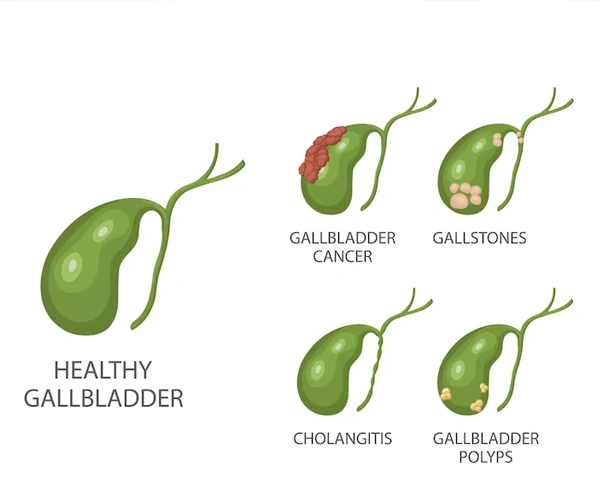
If you are searching for the best Gall Bladder Stone Treatment in Janakpuri, timely diagnosis and expert medical guidance are important to relieve symptoms and prevent complications. Gall bladder stones, also known as gallstones or cholelithiasis, are hardened deposits that form inside the gallbladder. These stones can block the normal flow of bile and may cause severe abdominal pain, digestive problems, inflammation, and other complications.
Gallstones may remain silent for years without causing symptoms, but when they block the bile ducts, they can lead to conditions such as gallbladder inflammation (cholecystitis), common bile duct stones, jaundice, or pancreatitis.
At Dr. Naresh Bansal's Gastro & Liver Clinic, patients receive comprehensive evaluation, accurate diagnosis, and personalized treatment recommendations for gall bladder stones and related digestive disorders.
What are Gall Bladder Stones?
Gall Bladder Stones are solid particles that develop inside the gallbladder due to an imbalance in the substances present in bile. The gallbladder is a small organ located beneath the liver that stores bile, a digestive fluid that helps break down fats.
Gallstones may vary in:
- Size
- Number
- Composition
The two main types of gallstones are:
Cholesterol Stones
These are the most common type and develop due to excess cholesterol in bile.
Pigment Stones
These develop due to excess bilirubin and are more commonly associated with certain blood disorders or liver conditions.
Gallstones may remain harmless if they do not block bile flow, but symptomatic stones often require medical evaluation.
Causes and Risk Factors of Gall Bladder Stones
Gallstones develop when bile components become imbalanced and form solid deposits.
Common causes and risk factors include:
- Excess cholesterol in bile
- Reduced gallbladder emptying
- Obesity
- Rapid weight loss
- High-fat diet
- Increasing age
- Family history of gallstones
- Female gender
- Pregnancy
- Diabetes
- Liver disorders
- Certain blood disorders
Lifestyle factors and genetic conditions may both contribute to gallstone formation.
Symptoms of Gall Bladder Stones
Many people with gallstones do not experience symptoms. However, when stones block bile flow, symptoms may occur.
Common symptoms include:
- Sudden pain in the upper right abdomen
- Pain after eating fatty meals
- Pain spreading to the back or right shoulder
- Nausea and vomiting
- Indigestion
- Bloating
- Gas and abdominal discomfort
- Fever in case of infection
- Yellowing of skin and eyes (jaundice)
A gallstone attack may cause severe pain lasting from minutes to several hours.
Complications of Gall Bladder Stones
Untreated symptomatic gallstones may lead to:
Acute Cholecystitis
Inflammation and infection of the gallbladder due to stone blockage.
Common Bile Duct Stones
Gallstones may move into the bile duct and block bile flow.
Pancreatitis
Stones can block pancreatic drainage and cause inflammation of the pancreas.
Gallbladder Infection
Bacterial infection may occur due to prolonged blockage.
Bile Duct Obstruction
Blockage may cause jaundice and liver-related complications.
Early diagnosis helps prevent these problems.
How are Gall Bladder Stones Diagnosed?
Diagnosis involves identifying the presence, size, and location of stones.
Ultrasound Abdomen
Ultrasound is the most commonly used test for detecting gallstones. It can identify:
- Number of stones
- Size of stones
- Gallbladder inflammation
- Bile duct changes
Blood Tests
Doctors may recommend:
- Liver Function Tests (LFT)
- Bilirubin levels
- Complete Blood Count (CBC)
- Pancreatic enzymes (Amylase and Lipase)
MRCP (Magnetic Resonance Cholangiopancreatography)
MRCP provides detailed images of bile ducts and helps detect stones that may have moved into the common bile duct.
Endoscopic Ultrasound (EUS)
EUS helps detect small stones and evaluates bile duct abnormalities with high accuracy.
How are Gall Bladder Stones Treated?
Treatment depends on symptoms, stone size, complications, and overall health.
Observation
Patients with silent gallstones that do not cause symptoms may only require monitoring.
Medication
In selected cases, medicines may be used to dissolve certain cholesterol stones, although this approach is suitable only for specific patients.
Surgical Treatment
Laparoscopic Cholecystectomy
The most common treatment for symptomatic gallstones is removal of the gallbladder through minimally invasive surgery.
Benefits include:
- Small incisions
- Faster recovery
- Relief from recurrent gallstone pain
- Prevention of future gallstone complications
ERCP for Common Bile Duct Stones
If stones move from the gallbladder into the common bile duct, ERCP may be required to remove them and restore bile flow.
Treatment Procedure
Step 1 – Initial Consultation
A detailed evaluation of symptoms, medical history, diet, and previous reports.
Step 2 – Diagnostic Evaluation
Ultrasound, blood tests, MRCP, or EUS may be performed to confirm the diagnosis.
Step 3 – Treatment Planning
The need for observation, medication, surgery, or endoscopic treatment is determined.
Step 4 – Stone Management
Treatment may include laparoscopic gallbladder removal or ERCP for bile duct stones.
Step 5 – Follow-Up Care
Regular follow-up helps ensure recovery and prevents complications.
Benefits of Early Gall Bladder Stone Treatment
Seeking timely Gall Bladder Stone Treatment in Janakpuri provides several benefits:
- Relief from recurring abdominal pain
- Prevention of gallbladder inflammation
- Reduced risk of pancreatitis
- Prevention of bile duct blockage
- Improved digestion
- Faster recovery with modern treatment options
- Reduced risk of emergency complications
- Better long-term digestive health
- Improved quality of life
Why Choose Dr. Naresh Bansal?
Dr. Naresh Bansal is an experienced Gastroenterologist specializing in digestive disorders, liver diseases, bile duct conditions, and pancreatic problems.
Patients choose Dr. Naresh Bansal because of:
- Extensive experience in gastroenterology
- Expertise in diagnosing gallbladder and bile duct disorders
- Advanced diagnostic evaluation
- Experience with ERCP and endoscopic procedures
- Comprehensive treatment planning
- Personalized patient care
- Evidence-based medical approach
- Focus on preventing complications
- Long-term follow-up support
- Comprehensive gastroenterology services in Janakpuri
Frequently Asked Questions (FAQs)
1. What are gall bladder stones?
Gall bladder stones are hardened deposits that form inside the gallbladder due to changes in bile composition.
2. Can gallstones disappear without treatment?
Most gallstones do not dissolve naturally. Treatment depends on whether they cause symptoms or complications.
3. When is surgery needed for gallstones?
Surgery is usually recommended for symptomatic gallstones causing repeated pain, inflammation, infection, or complications.
4. Can gallstones cause pancreatitis?
Yes. Gallstones can block the pancreatic duct and lead to inflammation of the pancreas, known as gallstone pancreatitis.
5. What is the role of ERCP in gallstone treatment?
ERCP is used to remove stones that have moved into the common bile duct and are causing blockage or jaundice.
Dr Naresh Bansal.All Rights Reserved © 2026